§ Journal · Jun 3, 2026
John Deere Deck Belt Keeps Breaking — The 5 Causes Reddit Mechanics Always Find
Your John Deere mower eats deck belts every few weeks. Reddit mechanics in r/lawnmowers and r/smallengines diagnose the same 5 root causes every time — and only one of them is the belt itself.
Published · Last updated:
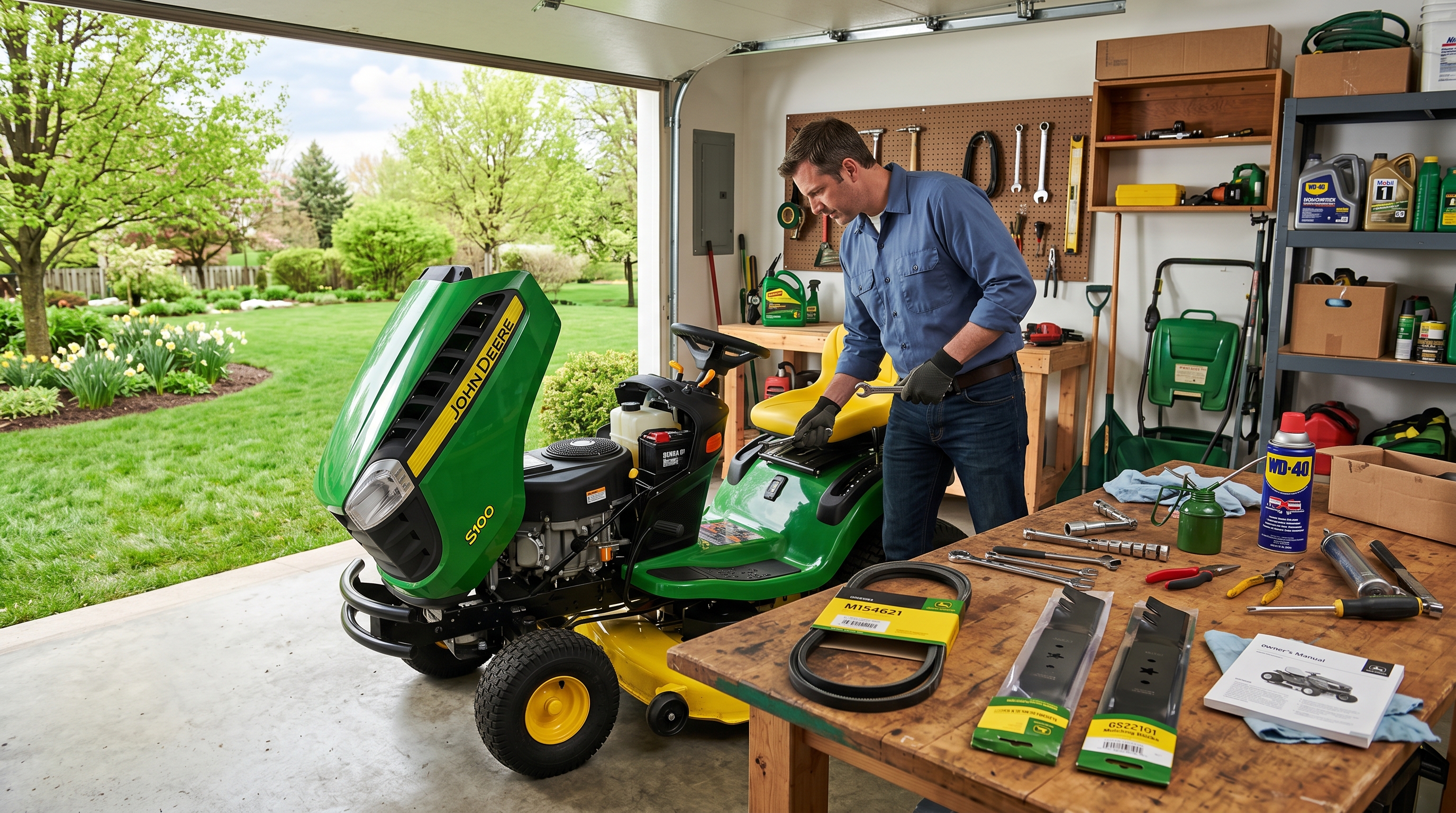
“John Deere always breaking belts” is one of the most upvoted posts in r/lawnmowers — and the comment section reads like a diagnostic flowchart written by a hundred mechanics who have all seen the same five problems. If you are on your third deck belt this season, the belt is almost never the problem. Something else is destroying it.
Here are the five causes, ranked by how often they appear in community discussions, with the specific fixes for each.
1. Seized or dragging spindle bearings
This is the number one belt killer, and the one most homeowners miss. Each blade spindle on your mower deck contains bearings that allow the spindle to spin freely. When these bearings wear out, the spindle drags — the belt has to work harder to turn it, generating heat and friction that glazes and stretches the belt until it snaps.
How to check: Remove the deck belt, then spin each spindle by hand. It should spin freely for at least 2-3 full rotations after you flick it. If it stops immediately, feels gritty, or makes grinding noises, the bearing is shot.
The fix: Replace the spindle assembly. On most John Deere mowers (D110, D130, LA115, LA130), the spindle assembly includes the bearings, shaft, and housing — it is easier and more reliable to replace the whole unit than to press new bearings into an old housing. Typical cost: $30-50 per spindle.
Warning sign you ignored: If the belt was squealing before it broke, that was the dragging spindle telling you it needed replacement.
2. Misaligned or bent deck
A deck that is not level puts uneven tension on the belt. One side pulls tight while the other side runs slack — the tight side overheats and breaks. This happens after hitting a stump, a buried rock, or any solid object that bends the deck shell.
How to check: Park on a flat concrete surface, set the deck to its middle height setting, and measure from the ground to each blade tip. All blades should be within 1/8” of each other. Then look at the deck shell from below — any visible bending, cracking, or deformation around the spindle mounting points means the deck is out of spec.
The fix: Minor bending can sometimes be corrected with a deck leveling adjustment (most John Deere decks have adjustable hangers). If the deck shell is cracked or severely bent at a spindle mount, the deck needs replacing.
3. Wrong belt size or aftermarket belt quality
Not all belts are equal, and not all “compatible” belts are actually the right size. A belt that is even 1/2” too long will slip; 1/2” too short and it runs under constant over-tension.
Common mistakes:
- Buying a belt by outside circumference without matching the profile (e.g., 1/2” vs 5/8” top width)
- Using a “universal” belt from an auto parts store instead of a mower-specific belt — automotive V-belts have different flex characteristics than mower deck belts
- Cheap no-name belts that stretch permanently after 3-4 uses
The fix: Buy an OEM-spec belt. John Deere uses specific belt part numbers for each mower model — the number is usually printed on the old belt or listed in the owner’s manual. An aftermarket belt from a reputable brand (Oregon, Stens, MaxPower) is fine as long as the part number cross-references correctly.
Check your specific model in our belt compatibility guide.
4. Missing or damaged belt guides and keepers
Every mower deck has small metal guides that keep the belt routed correctly as it wraps around the spindle pulleys and tensioner. If one of these guides is bent, missing, or has too much clearance, the belt can ride up on a pulley and roll off — which looks like “breaking” but is actually the belt coming off and getting chewed up.
How to check: With the belt removed, inspect every guide bracket. They should be close enough to the pulley that the belt cannot jump out of the groove, but not so close that they contact the belt during operation. Typical clearance: 1/16” to 1/8”.
The fix: Bend guides back into position with pliers, or replace if cracked. These are cheap stamped-steel parts — $5-10 from any mower parts dealer.
5. Tensioner spring worn out
The deck belt tensioner uses a spring-loaded arm to maintain constant belt tension as the belt stretches and wears. When the spring loses its force (which happens gradually over 3-5 years), the belt runs slack, slips on the pulleys, overheats, and breaks.
How to check: With the engine off and the deck engaged, push on the belt midway between two pulleys. It should have about 1/2” of deflection. If it deflects more than 1”, the tensioner spring is weak.
The fix: Replace the tensioner spring (typically $8-15) or the entire tensioner arm assembly if the pivot is worn ($20-30).
The diagnostic shortcut
If you are breaking belts repeatedly and want to find the cause fast:
- When the belt breaks, look at the break point. A clean snap means over-tension (wrong size or seized spindle). A frayed, glazed, or shredded break means heat and slipping (dragging bearing or weak tensioner).
- Smell the broken belt. A burned rubber smell means friction — look for a dragging spindle or a misaligned pulley.
- Check the old belt for uneven wear. One side worn more than the other means the deck is not level or a guide is bent.
For step-by-step belt replacement on riding mowers, see our guide: Replacing a mower deck belt step by step. For a seasonal maintenance approach that catches these problems before they break belts, see our spring mower startup checklist.

Find the right part on Amazon
Check price, stock and fitment — ships direct from Amazon.
§ Catalog
Shop the catalog