§ Journal · Jun 2, 2026
Spring Mower Startup — 5 Parts to Check Before the First Cut
Five wear parts to inspect on your mower before the first spring cut, from deck belts and blades to spark plugs and oil.
Published · Last updated:
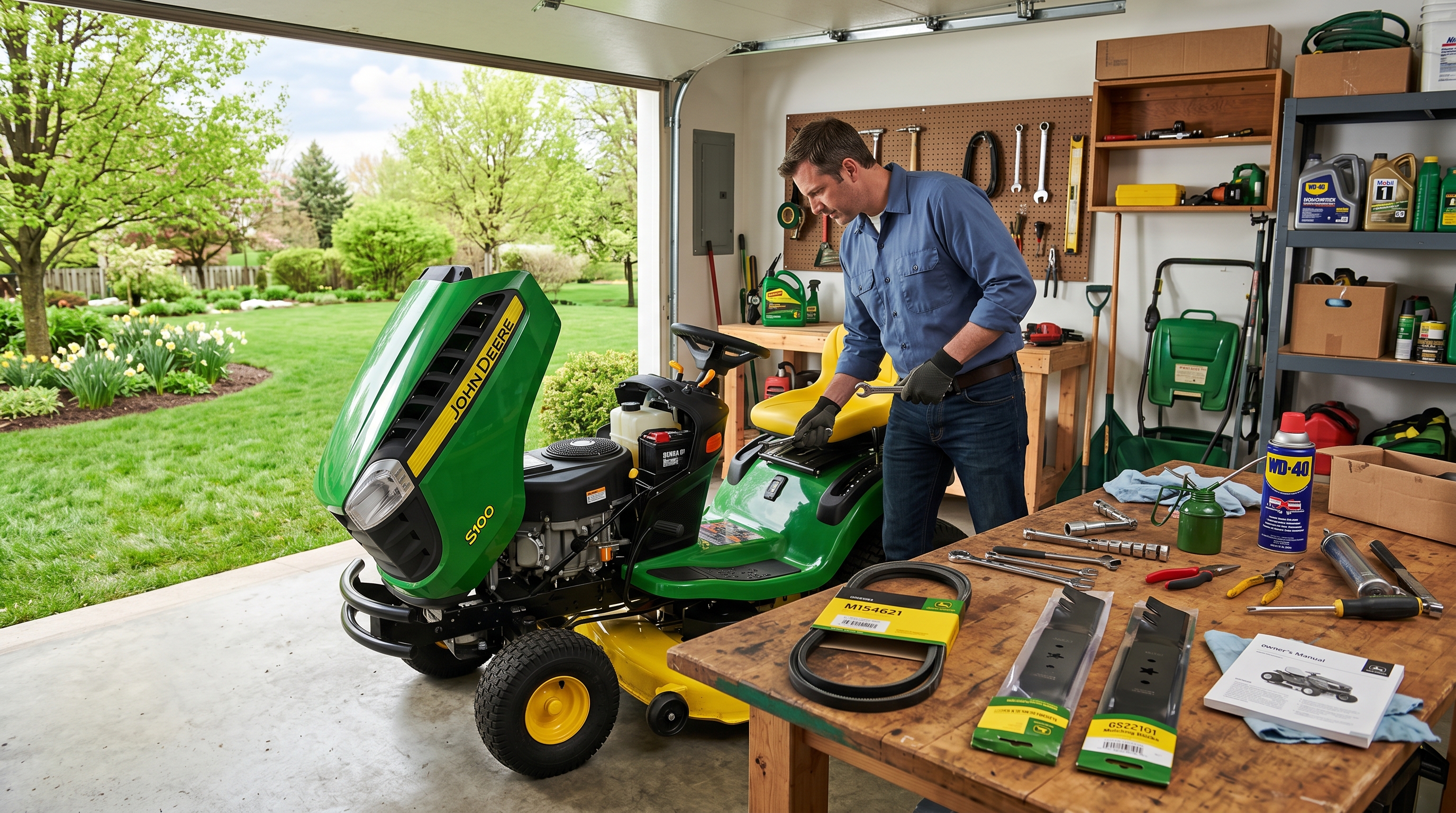
The first mow of the season tells you everything about how your machine spent the winter. A mower that sat with old fuel, a stretched belt, and dull blades will let you know within the first pass. The good news is that the five parts most likely to cause problems are all easy to check and inexpensive to replace. Spending twenty minutes in the garage before that first cut can save hours of frustration once the grass is growing fast.
Here are the five parts to inspect before you pull the cord or turn the key.
1. Deck Belt
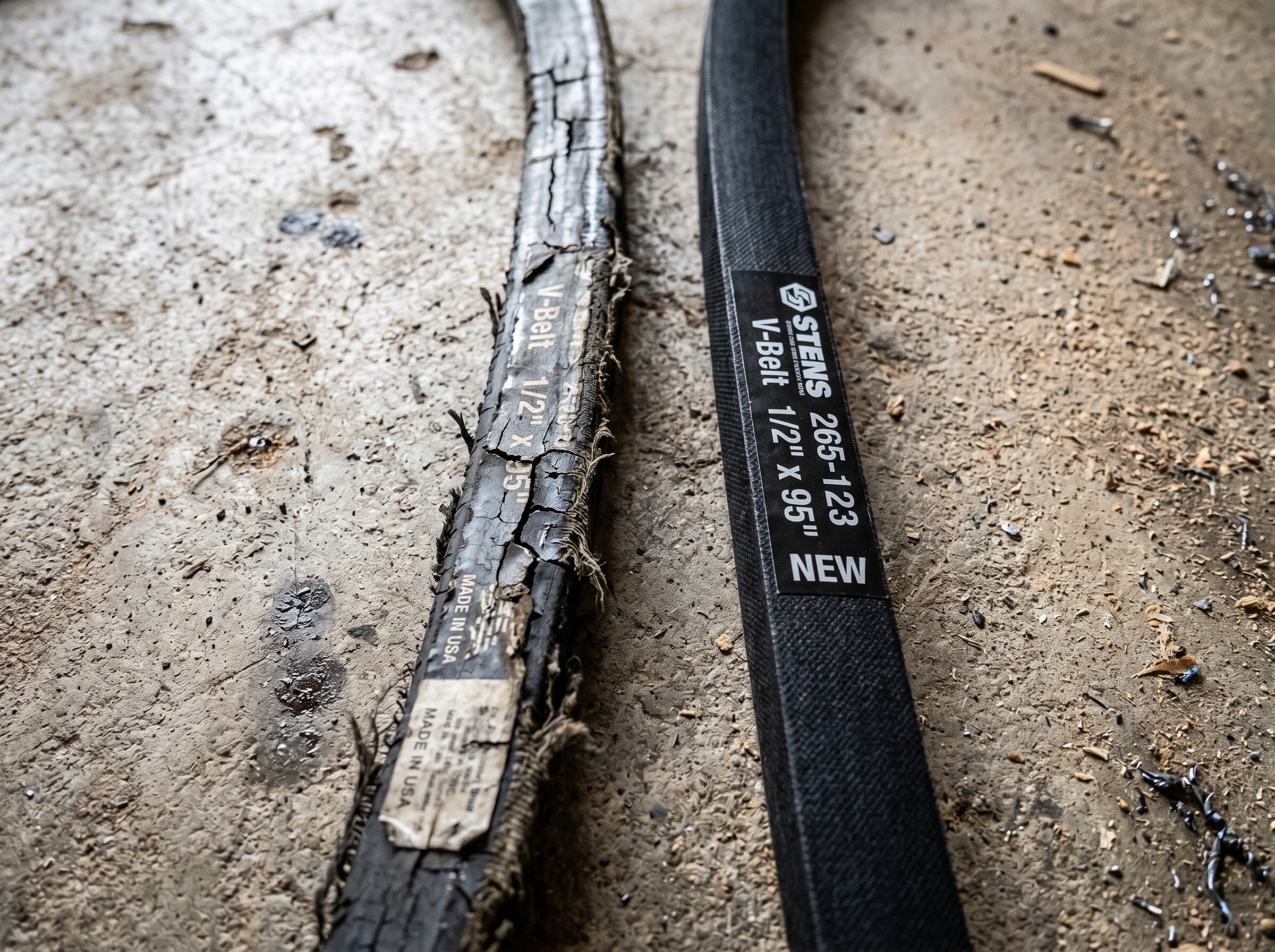
The deck belt is the single most overlooked wear part on a mower. It drives the blades, and when it starts to fail, cut quality drops before the belt actually breaks. After months of sitting, rubber compounds stiffen. Add last season’s heat cycling and tension stress, and you have a belt that may look intact but is already past its useful life.
Check for these signs:
- Cracks across the ribs or along the sidewalls
- Glazing on the contact surfaces, which looks shiny and smooth instead of matte
- Stretch, visible when the tensioner sits lower than normal or the belt feels loose by hand
- Frayed edges or missing chunks of rubber
A worn belt causes more than just a breakdown risk. It slips under load, which means uneven blade speed and uneven cuts. That slipping also forces the engine to work harder, adding strain to the crankshaft, spindles, and pulleys. Replacing a ten-dollar belt is far cheaper than rebuilding a spindle assembly.
If you are not sure whether your belt is worn or if the issue is something else, the guide on how to diagnose belt wear on tillers and mowers walks through the specific symptoms. And if the belt is clearly done, follow the steps in replacing a mower deck belt to get the routing and tension right.
If you have already gone through more than one belt this season or last, there may be a deeper issue at play. Misaligned pulleys, seized idlers, or incorrect belt lengths are common culprits. The article on why your mower deck belt keeps breaking covers the most frequent causes.
2. Mower Blades
Dull blades tear grass instead of cutting it. The result is ragged, white-tipped grass that looks bad and is more vulnerable to disease. After a full season of use and several months of storage, blades are often dull, nicked, or slightly bent from hitting debris.
Pull the blades and inspect them:
- Run a finger carefully along the cutting edge. A sharp blade has a defined edge; a dull one feels rounded.
- Sight down the length of the blade to check for bends. Even a slight curve throws off balance and causes vibration.
- Look for deep nicks or chips that cannot be filed out without removing too much material.
- Check the center hole and mounting area for elongation or cracks.
Blades that are merely dull can be sharpened and balanced. Blades that are bent, cracked, or worn thin should be replaced. Running an unbalanced blade damages spindle bearings over time, which is a much more expensive repair.
3. Air Filter
A dirty or collapsed air filter restricts airflow to the engine. The result is rich running, poor power, hard starting, and increased fuel consumption. Paper filters that sat all winter can absorb moisture and become partially blocked even if they looked clean in the fall.
Pull the filter and hold it up to light. If you cannot see light through a paper element, replace it. Foam pre-filters should be washed, dried, and lightly re-oiled if the manufacturer calls for it. This is a two-dollar part that has an outsized effect on engine performance.
4. Spark Plug
A spark plug that fired fine last October may not fire well in April. Carbon buildup, corroded electrodes, and moisture exposure during storage all degrade ignition quality. A weak spark means hard starting, misfires, and rough running.
Remove the plug and check:
- Electrode gap against the spec in your owner’s manual
- Carbon or oil fouling on the electrode and insulator
- Corrosion on the threads or terminal
A new spark plug costs a few dollars and takes two minutes to install. For spring startup, fresh is better than questionable. If the old plug shows heavy oil fouling, that can point to a deeper issue like worn rings or a tilted storage position, but a new plug is still the right first step.
5. Engine Oil
Four-cycle mower engines need clean oil. Oil that sat all winter has settled, and any moisture condensation inside the crankcase mixes into it. Old oil also loses its viscosity rating over time, which means reduced protection during the high-load conditions of mowing.
Drain the old oil with the engine slightly warm if possible. Refill with the weight and type specified in the owner’s manual. Check the level on the dipstick after filling and again after running the engine for a minute. Overfilling causes smoking and seal pressure; underfilling causes heat damage.
If your mower is a two-cycle unit, confirm your fuel mix ratio and use fresh fuel with the correct two-stroke oil.
The Twenty-Minute Spring Routine
These five checks can all be done in a single short session:
- Tip or raise the mower and inspect the deck belt and blades
- Pull and inspect the air filter
- Remove and check the spark plug
- Drain and replace the engine oil
- Add fresh fuel
That sequence covers the parts responsible for the vast majority of first-cut problems. Everything else, wheels, cables, safety switches, is worth a look too, but these five are where most spring failures start.
A mower that starts clean, cuts sharp, and runs smooth on day one will carry that performance through the season. The parts are cheap. The time investment is small. The payoff is not having to troubleshoot a sputtering, uneven-cutting machine when the grass is already six inches tall.

Find the right part on Amazon
Check price, stock and fitment — ships direct from Amazon.
§ Catalog
Shop the catalog