§ Journal · Jun 5, 2026
OEM Mower Belt Number vs Belt Length: Which One Should You Trust?
When a mower belt listing gives both an OEM number and a length, trust the OEM cross-reference first and verify width, profile, and routing.
Published · Last updated:
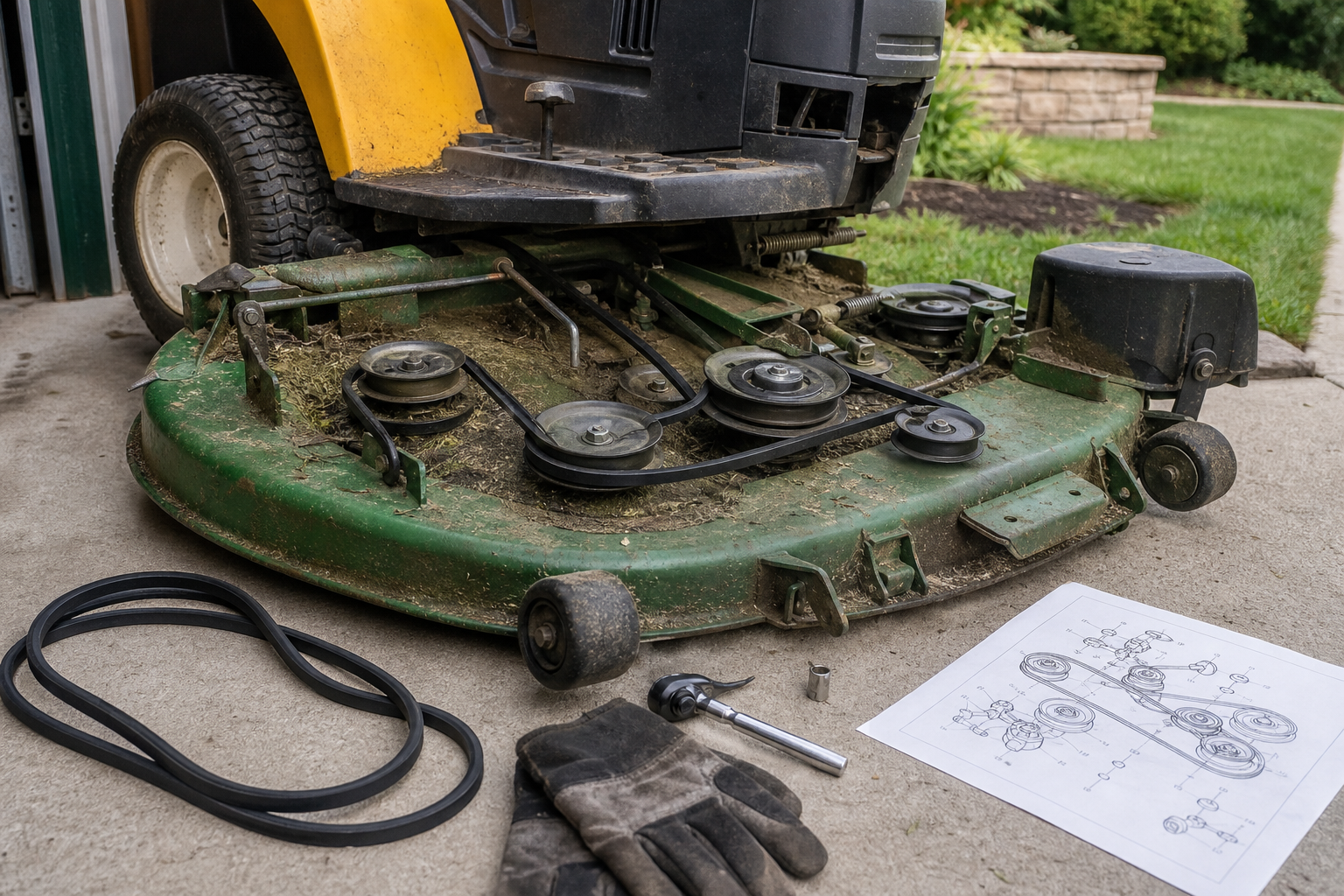
When buying a mower deck belt, you may see two kinds of information: an OEM part number and a belt length. If they conflict, the OEM cross-reference is usually the better starting point, but it still needs verification.
Why length can mislead
Belt listings may use inside length, outside length, or effective length. Those are not always the same number. A worn belt also stretches, so measuring the old belt can point you slightly long.
What the OEM number gives you
An OEM number links the belt to a deck design, not just a measurement. It usually accounts for:
- Belt width
- Belt profile
- Deck pulley layout
- Idler tension range
- Intended application
That is why experienced mower owners often search the OEM number first.
How to verify a cross-reference
| Check | What to compare |
|---|---|
| OEM number | Exact match or listed replacement |
| Width | Commonly 1/2” or 5/8”, but verify |
| Length type | Know whether the listing uses outside or effective length |
| Deck model | Same deck size and mower family |
| Belt type | Wrapped, raw edge, cogged, or Kevlar-style |
If your mower has a history of throwing belts, inspect the deck before blaming the replacement. Start with diagnose belt wear on tillers and mowers.
FAQ
Is a cheaper cross-reference safe?
It can be, if the OEM number, width, profile, and application match. Avoid listings that only match approximate length.
Can I use an automotive belt?
Usually no. Mower belts deal with different pulley geometry, clutching, and outdoor debris.

Find the right part on Amazon
Check price, stock and fitment — ships direct from Amazon.
§ Catalog
Shop the catalog