§ Journal · Jun 2, 2026
2026 Cordless Power Tool Parts — Cross-Brand Compatibility Guide
With more brands releasing 56V and 60V tools in 2026, replacement parts compatibility gets complicated. This guide maps which parts work across brands.
Published · Last updated:
2026 Cordless Power Tool Parts — Cross-Brand Compatibility Guide
The cordless outdoor power tool market in 2026 is bigger, better, and more confusing than ever. Homeowners now commonly own a mix of brands instead of staying loyal to just one battery platform. A garage might hold a DeWalt string trimmer, a Ryobi mower, a Milwaukee blower, and an EGO hedge trimmer all at the same time. That variety is great for shopping deals and choosing the best tool for each job, but it creates a practical question when it is time for maintenance: which replacement parts can cross brands, and which absolutely cannot?
For buyers shopping aftermarket parts such as belts, blades, trimmer heads, and saw blades, the answer comes down to understanding the difference between a power platform and a wear part. Some items are locked into a specific brand’s design. Others are universal as long as the dimensions match. In 2026, knowing that distinction can save money, prevent ordering mistakes, and make routine repairs much easier.
The cordless power tool landscape in 2026
The major cordless outdoor power platforms remain clearly defined. DeWalt continues to center its outdoor line around 20V MAX tools, with FlexVolt 60V products serving heavier-duty applications. Milwaukee remains strong with M18, expanding its cordless lawn and landscaping lineup for users already invested in that battery family. Ryobi still dominates the homeowner market through ONE+ for lighter tools and 40V for more demanding outdoor equipment.
EGO remains a major player in premium cordless outdoor equipment with its 56V platform, especially in mowers, blowers, and trimmers. Greenworks continues with both 60V and 80V systems, giving homeowners and prosumer users multiple performance tiers. Makita maintains its split strategy as well, with 36V outdoor products often powered by dual 18V batteries, while 40V Max XGT tools serve higher-output applications.
To the average buyer, many of these platforms can look similar. Voltage ratings may appear close. Tool categories overlap. Performance claims often sound nearly identical. But when it comes to batteries and electronic fitment, these systems are separate ecosystems.
Battery interchangeability: none means none
One of the biggest myths in cordless tools is that similar voltages imply compatibility. They do not. In 2026, no major brand’s batteries are designed to work directly in another brand’s cordless outdoor tools. A DeWalt 20V battery does not fit a Milwaukee M18 tool. A Ryobi 40V pack does not belong on an EGO 56V machine. A Greenworks 60V battery is not a substitute for Makita 40V, even if the numbers seem close enough to tempt experimentation.
This is true not only because of voltage differences, but because of battery housing shape, rail design, terminal layout, communication electronics, and charging logic. Even within similar nominal voltages, the pack architecture is brand-specific. The same rule applies to chargers and battery mounts. These are not universal parts, and aftermarket buyers should treat them as brand-locked components.
That means the practical compatibility conversation should focus not on batteries, but on consumable and mechanical parts.
Parts that really can be cross-compatible
The good news is that many wear items do not care what logo is printed on the tool. If the dimensions and attachment method match, one part can often serve several brands.
Trimmer line
Trimmer line is one of the easiest examples of true cross-compatibility. It is generally universal by gauge and shape. If your trimmer head accepts .065”, .080”, .095”, or .105” line, then any quality line in that diameter can work, regardless of whether the trimmer itself is from DeWalt, Ryobi, Milwaukee, EGO, Greenworks, or Makita. Twisted, round, square, and serrated profiles may vary in cutting behavior, but compatibility depends on line size and head capacity, not battery platform.
Mower blades
Mower blades can also cross brands in many cases, but only when the measurements match. Blade length, center hole shape, arbor size, and side hole pattern all matter. Two mowers from different brands may use blades of identical length with the same mounting pattern. If so, a single aftermarket blade design may fit both. This is where aftermarket manufacturing shines: one blade can serve multiple OEMs if the bolt pattern and dimensions align.
Drive belts
Drive belts are another category where specifications matter more than branding. Belts are matched by length, width, thickness, and profile. If those dimensions are the same, an aftermarket belt may fit models across different manufacturers. Buyers should always verify the exact specs, but belts are often more universal than shoppers expect.
Parts that are not cross-compatible
Just as important is knowing what not to mix.
Trimmer spools
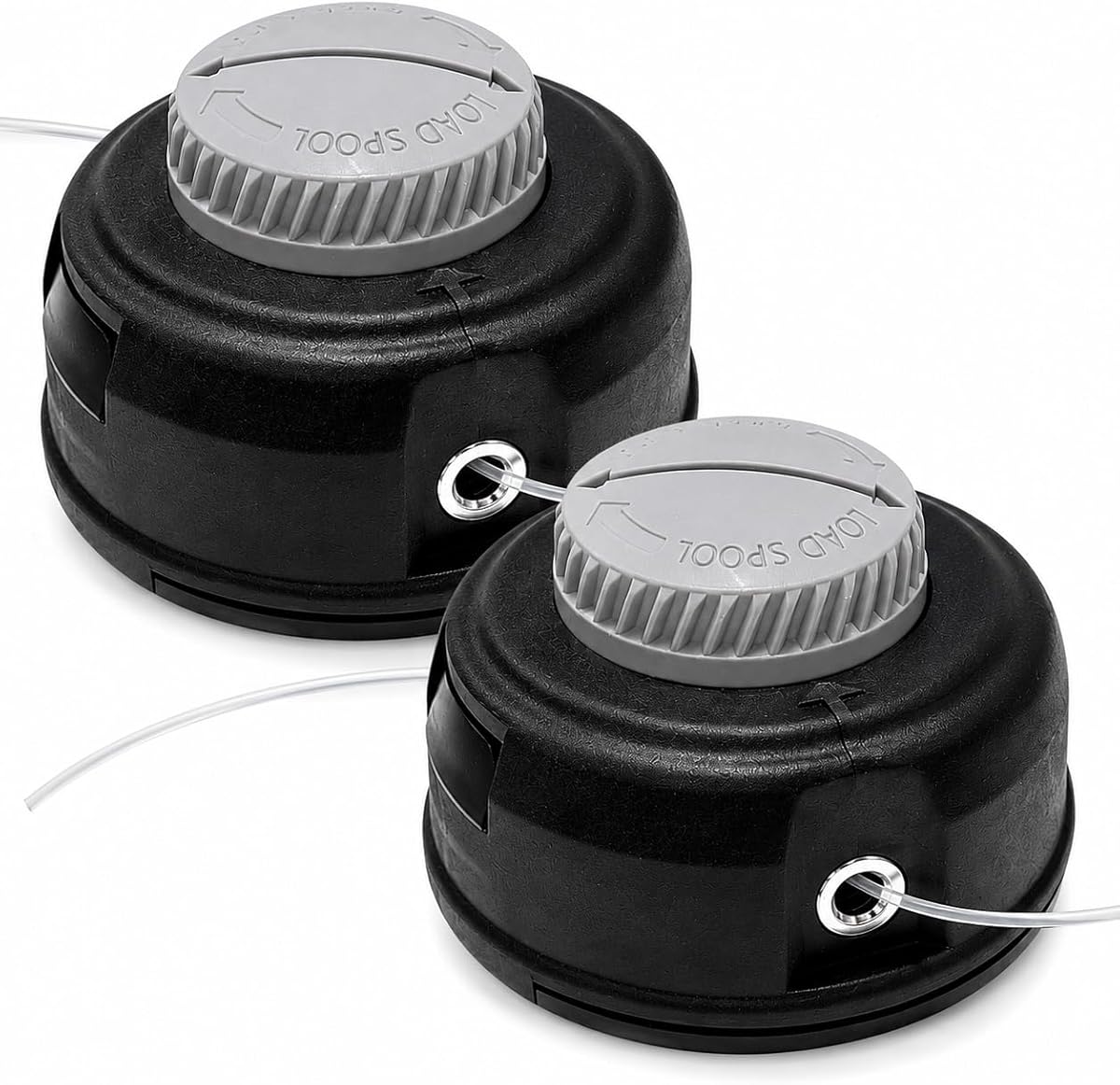
Trimmer spools are often mistaken for universal parts, but they are usually not. The spool housing, bump-feed mechanism, cap design, spring dimensions, and internal locking tabs tend to be highly brand-specific, and sometimes even model-specific within the same brand. The line itself may be universal, but the spool assembly usually is not.
Battery mounts and chargers
Battery mounts, adapters, and chargers remain brand-specific categories. The physical slide rails, contacts, heat management, and communication systems are engineered for particular battery packs. A similar-looking mount from another brand is not a safe substitute. Chargers especially should never be treated as universal.
Edger blades: one of the most universal categories
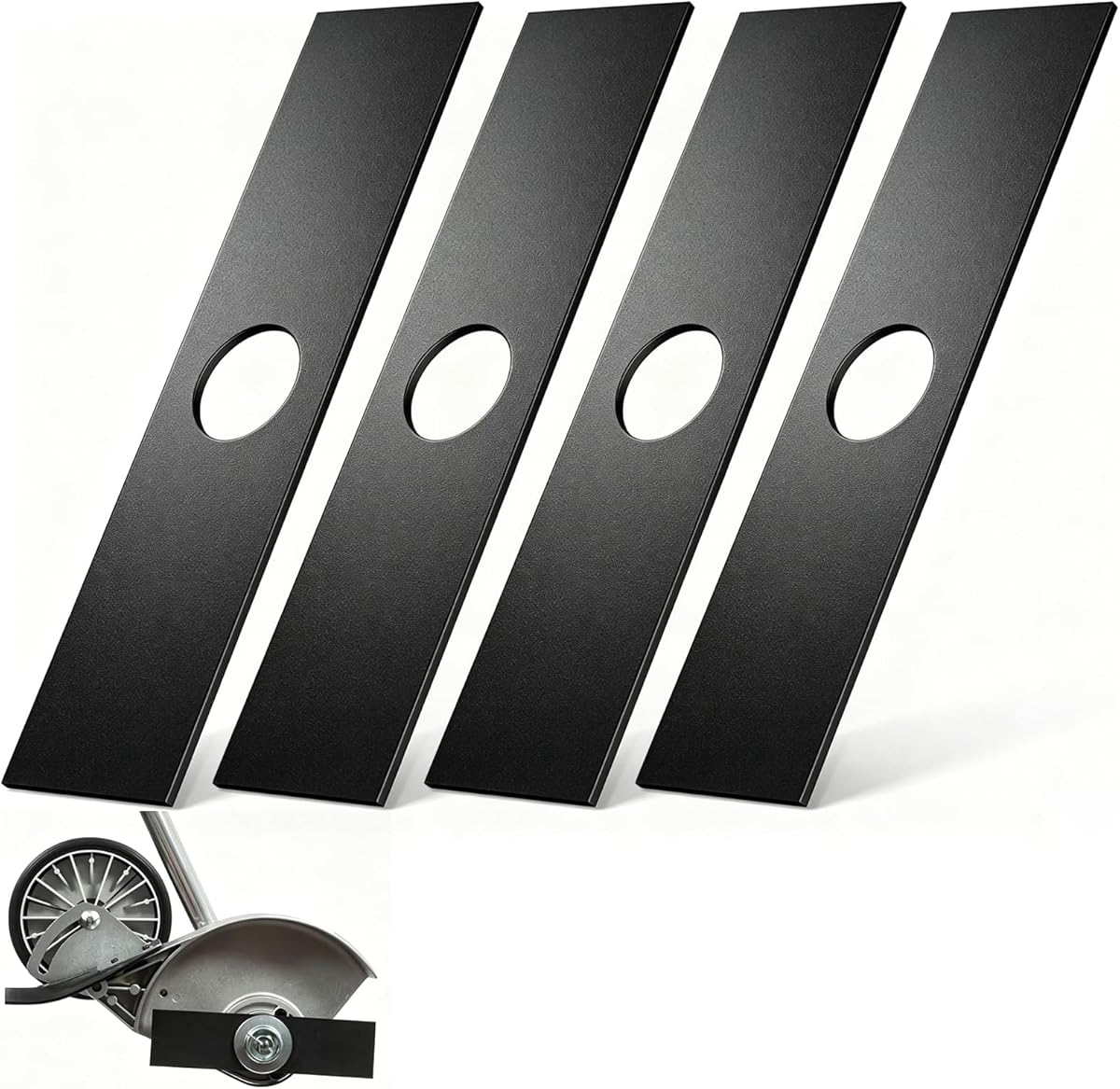
Edger blades are a bright spot for homeowners managing mixed-brand collections. Most 8-inch edger blades are effectively universal, provided the arbor hole size and blade diameter match the tool. Many straight-shaft edgers from different brands use nearly identical blade dimensions. If the blade is 8 inches in diameter and the center hole matches the shaft arbor, it will often fit across multiple brands without issue.
This is a perfect example of a part category where measurement matters more than the name on the box.
Brad nails and fasteners: truly universal
Fasteners are among the most genuinely universal supplies in the broader cordless tool world. Brad nails, finish nails, and similar fasteners are standardized by gauge and length. An 18-gauge brad nail works across compatible nailers from DeWalt, Milwaukee, Ryobi, Makita, and others, assuming the tool is designed for that fastener type and size range. The same principle applies to many staples and finish fasteners.
Unlike batteries, these consumables are industry-standard. Buyers can shop by gauge, length, and material rather than by tool brand.
The aftermarket advantage
This is where aftermarket parts deliver real value. An aftermarket manufacturer does not have to think in terms of brand loyalty. It can produce a mower blade, drive belt, edger blade, or saw blade that fits multiple brands if the underlying specifications match. For homeowners, that means broader selection, more pricing options, and often faster access to replacements.
A good aftermarket catalog is built around fitment data, dimensions, and practical interchange, not just OEM part numbers. That is especially useful for people maintaining several cordless tools from different manufacturers.
How to verify compatibility the right way
The best rule for 2026 is simple: measure, do not assume.
Use a tape measure to confirm blade length and overall diameter. Use calipers to check arbor hole size, center slot dimensions, belt width, and other critical fitment points. Compare bolt hole spacing instead of relying on appearance. For trimmer line, verify the diameter printed on the head or in the manual. For belts, confirm both the dimensions and belt profile.
This extra step matters because visual similarity can be misleading. Two mower blades may look nearly identical but differ by a few millimeters at the center hole. That small difference is enough to make the part unsafe or unusable.
The most common mistake
The most common buyer mistake is assuming that “20V” and “20V MAX” mean the same thing across brands. They do not. These labels are marketing and platform identifiers, not signs of cross-brand fitment. A 20V-class tool from one company does not share batteries, chargers, mounts, or electronic accessories with another just because the number looks familiar.
For homeowners with multi-brand cordless collections, the smartest approach is to separate electronic compatibility from mechanical compatibility. Batteries, chargers, and spool housings are usually brand-specific. Trimmer line, many edger blades, some mower blades, many belts, and standard fasteners can often cross brands when dimensions match.
That is the key to buying replacement parts confidently in 2026: know which category you are shopping, verify the specs, and let measurements—not marketing labels—guide the purchase.

Find the right part on Amazon
Check price, stock and fitment — ships direct from Amazon.
§ Catalog
Shop the catalog