§ Journal · May 28, 2026
Troy-Bilt: How to Change the Deck Belt on a Troy-Bilt Riding Lawn Mower
Step-by-step guide for Troy-Bilt owners — with video walkthrough.
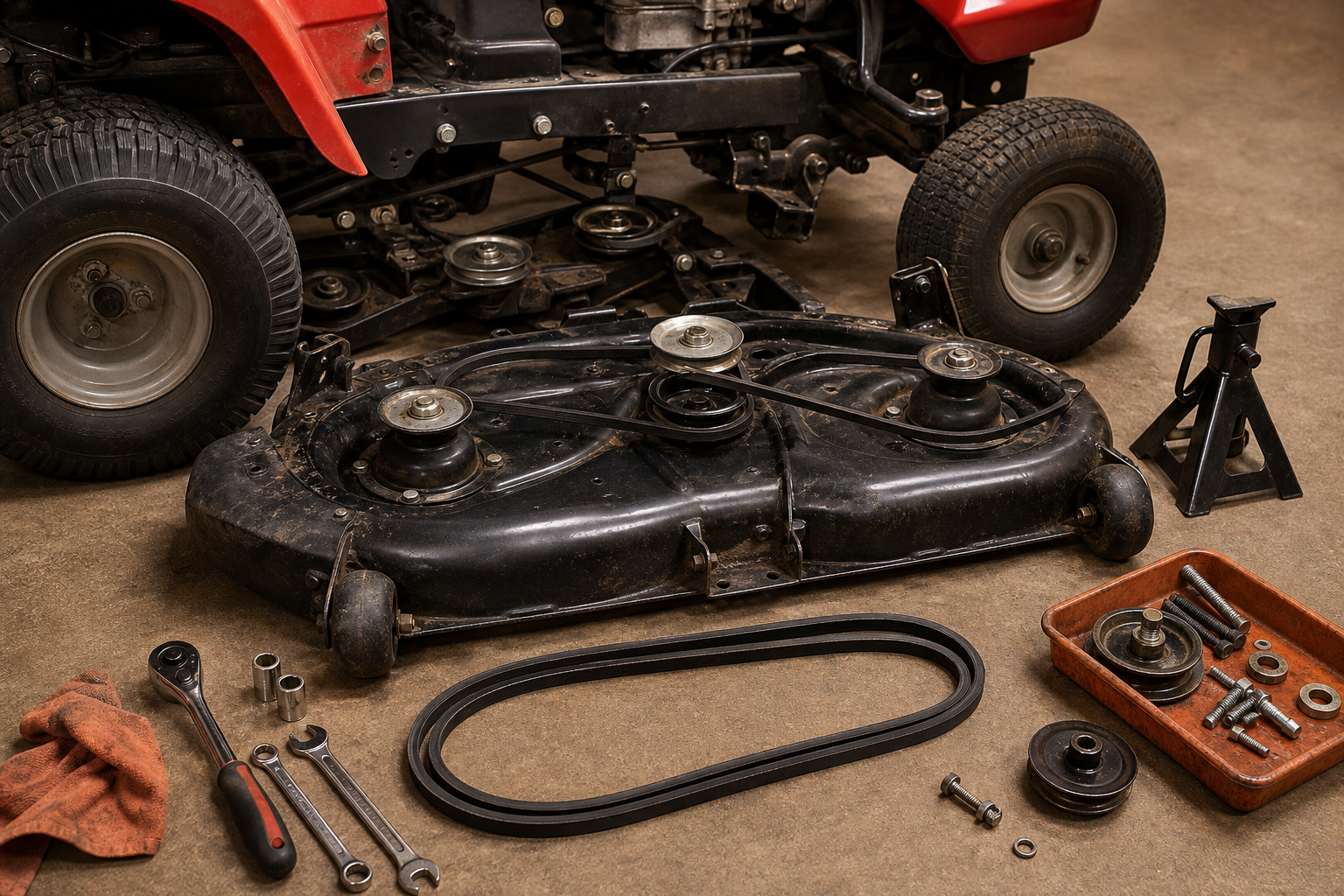
If your Troy-Bilt riding mower suddenly stops cutting even though the engine runs fine, or the blades won’t engage consistently, a worn or broken deck belt is one of the first things to check. The deck belt transfers power from the engine pulley to the mower deck pulleys, so when it stretches, cracks, or slips off, cutting performance drops fast. Replacing it is a straightforward repair for most homeowners if you work carefully and pay attention to belt routing. Below is a practical step-by-step guide to help you change the deck belt on a Troy-Bilt riding lawn mower and get back to a clean, even cut. If you need a replacement belt or related spindle and pulley parts, compatible parts are available on our site.
Tools and parts you’ll need
Before you begin, gather everything you need so the job goes smoothly.
- Replacement deck belt made for your specific Troy-Bilt model
- Work gloves
- Safety glasses
- Socket set or wrench set
- Pliers
- Screwdriver or nut driver, depending on deck guards
- Wooden blocks or a small jack for support if needed
- Clean rag
- Penetrating oil for stubborn hardware
- Your mower’s model number for correct parts matching
A quick parts-counter tip: Troy-Bilt used several deck sizes and belt lengths across riding mower models, so don’t assume all belts are the same. Match the replacement belt by model number and deck size. Using the wrong width or length can cause poor blade engagement, premature wear, or the belt jumping off the pulleys.
Prepare the mower safely
Start by parking the mower on a flat, level surface. Set the parking brake, turn the ignition off, and remove the key. For added safety, disconnect the spark plug wire so the engine cannot accidentally start while your hands are near the pulleys.
Lower the mower deck to its lowest cutting position. This gives you better access to the deck hardware and helps release some tension from the belt system.
If your model has a PTO lever or blade engagement control, place it in the disengaged position. On electric PTO models, make sure the switch is off.
Before removing anything, take a good look underneath and around the top of the deck if visible. If the old belt is still in place, note the routing around the spindle pulleys, idler pulleys, and engine pulley. Taking a few phone pictures now can save time during reassembly.
Inspect the deck area for packed grass, sticks, or debris. Built-up material can interfere with belt movement and make pulley inspection harder. Clean the deck enough that you can clearly see guards, keepers, and routing points.
Remove the mower deck and old belt
On many Troy-Bilt riding mowers, replacing the deck belt is easiest with the deck removed from the tractor. Some models allow partial access without full removal, but pulling the deck out usually gives you more working room and reduces frustration.
First, remove the belt from the engine pulley. Depending on your model, you may need to reach under the mower from the side and slip the belt off the PTO pulley while rotating it by hand. Be careful around belt keepers and guide rods.
Next, disconnect the deck support links or hanger arms. These are typically secured with clips and washers. Remove the clips carefully with pliers and set the hardware aside in order so it goes back in the same locations.
Disconnect the front draft rod or front deck support, again noting how the hardware is installed. Once all attachment points are free, slide the deck out from under the mower. If the deck feels stuck, double-check for a missed hanger, keeper, or belt still caught on the engine pulley.
With the deck out, remove any pulley covers or belt guards from the top of the deck. These usually come off with a few screws. Once exposed, relieve tension on the belt by moving the idler pulley arm. On some decks, this is spring-loaded, so use caution and keep your fingers clear of pinch points.
Slip the old belt off the pulleys. As you remove it, inspect each pulley closely:
- Check spindle pulleys for wobble
- Spin idler pulleys to listen for rough bearings
- Look for sharp edges, cracks, or glazing
- Confirm belt keepers are not bent into the belt path
If a pulley is seized or a spindle bearing is failing, replacing only the belt may lead to another breakdown. This is a good time to handle worn deck parts, and compatible replacements are available on our site.
Install the new deck belt correctly
Compare the new belt to the old one before installation. The old belt may be stretched, but the width and general profile should match. A deck belt is typically a heavy-duty V-belt designed for clutching and backside idler contact, so don’t substitute a generic hardware-store belt.
Route the new belt around the spindle pulleys first, following the original path. Most Troy-Bilt decks use a belt path that wraps around two blade spindle pulleys and passes around one or more idler pulleys to maintain tension. Make sure the V-side of the belt rides in V-groove pulleys and the flat backside rides against flat idlers if equipped.
As you route the belt, check that it sits fully inside each pulley groove and is not twisted. A half-seated belt can look installed correctly at a glance but will roll, shred, or jump off once the blades engage.
Reinstall any belt keepers and guards you removed. Belt keepers should sit close enough to prevent the belt from coming off but not so close that they rub continuously during operation. If a keeper got bent outward, gently reposition it to match the original spacing.
Once the belt is fully routed, move the idler arm through its travel to confirm the belt tracks properly and the tension spring is doing its job. There should be firm tension, but the belt should move freely through the system without binding.
Reinstall the deck and test operation
Slide the deck back under the mower from the side it came out. Reconnect the front draft rod, rear support links, and any lift arms or hangers. Install the washers and clips in the same order they were removed.
Route the belt back onto the engine pulley last. This step sometimes takes a little patience because the belt must fit between the pulley and the belt keeper rod. Make sure the belt is centered on the engine pulley and not pinched.
Raise and lower the deck by hand using the lift lever to verify nothing binds. If the deck doesn’t move smoothly, check that the hanger arms are attached correctly and the belt is not routed over a bracket by mistake.
Reconnect the spark plug wire. Start the mower with the deck disengaged first and let it idle. Then engage the blades briefly and listen. The belt should run smoothly without slapping, squealing, or smoking. Disengage and inspect again if you hear unusual noise.
Finally, test-cut a small patch of grass. If the mower cuts evenly and the blades stay engaged under load, the repair was successful. If the belt slips off again right away, recheck routing, keeper alignment, idler condition, and belt part number.
Watch the video
If you’d like a visual walkthrough, this video shows the basic process of changing the deck belt on a Troy-Bilt riding lawn mower:
Use the video along with the steps above to compare your deck layout, hardware locations, and belt routing. Since Troy-Bilt made several variations, always defer to your exact model’s parts diagram when ordering a belt or related deck components.
FAQ
How do I know if my Troy-Bilt deck belt needs replacing?
Common signs include blades not engaging, weak cutting performance, a burning rubber smell, visible cracks, frayed edges, glazing, or a belt that keeps slipping off. If the belt looks narrow from wear or has deep cracking, replace it.
Can I replace the deck belt without removing the deck?
On some Troy-Bilt models, yes, but it’s usually more difficult. Removing the deck gives you better access to the pulleys, guards, and idler system, and makes it easier to confirm the new belt is routed correctly.
What happens if I install the wrong belt?
The wrong belt can slip, stretch quickly, fail to tension properly, or come off the pulleys. It may also reduce blade speed and leave an uneven cut. For best results, use the correct compatible replacement belt for your model and deck size, available on our site.
§ Catalog
Shop the catalog